Visual impairment is a congenital or acquired loss of vision. It can also be defined as partial loss of vision or complete visual impairment.
From past to present, many projects have been developed for the visually impaired, who constitute a significant majority of the population. These projects have liberated visually impaired individuals, enabling them to read any book they want at any time.
To answer the question of how a visually impaired person reads a book, we need to look to the past and talk about the 'braille' writing system.
What is Braille?
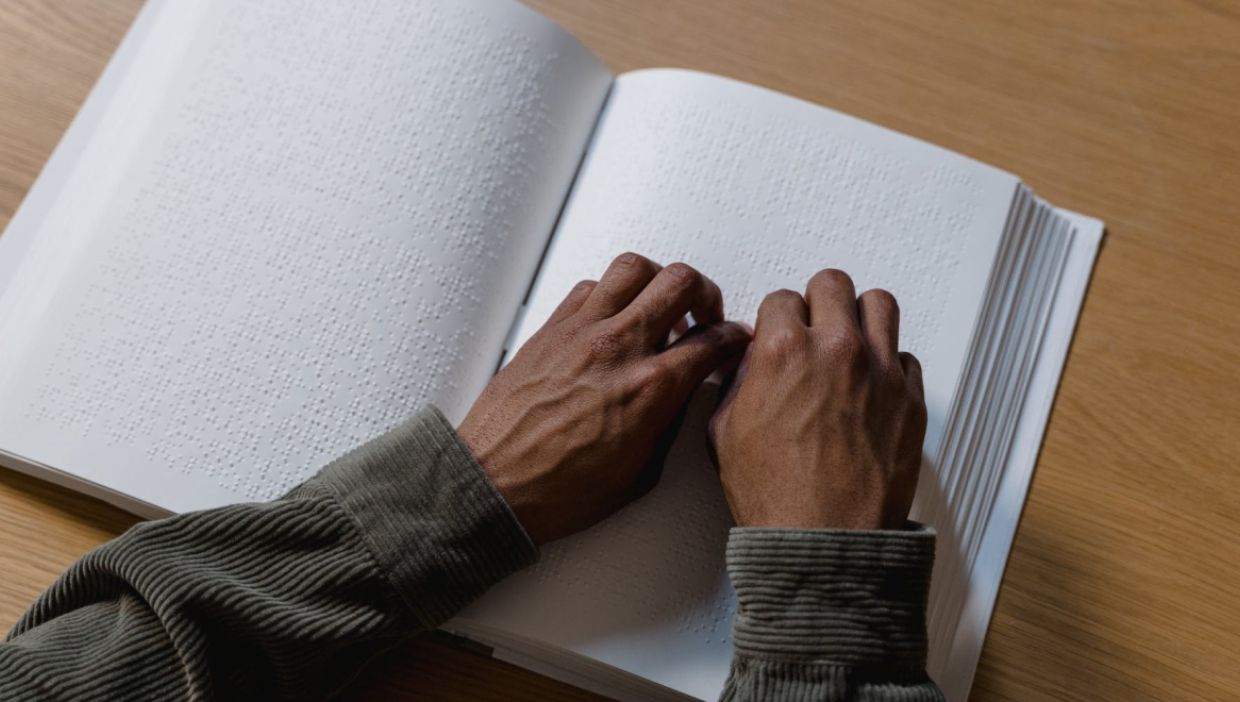
This writing system, created by Louis Braille in 1829, involves the embossing of raised dots on cardboard. Visually impaired individuals can read a book by sensing these dots with their fingertips. This system is quite old but has allowed visually impaired individuals to learn to read and write over the years.
Today, thanks to the developing technology and software, it has become much easier for the visually impaired to access such actions.
How does a visually impaired person read a book? Where does a visually impaired person access books?
The visually impaired person's access to technological devices or mobile applications is provided through 'voice' and 'screen reading'. Visually impaired people can read books with audio books and similar applications. Apart from applications and software, there are organizations that enable visually impaired individuals to read books as volunteer readers. To make a book accessible to visually impaired individuals, you can record it in a studio environment. Visually impaired individuals can read books comfortably thanks to applications such as volunteer readers, audio book applications on phones and computers.
We say that we should be conscious and aware of such projects that make life easier for the visually impaired, and as the BlindLook team, we continue to work for accessible projects that make life easier.
Author: Beyza Koyuncular / BlindLook Team