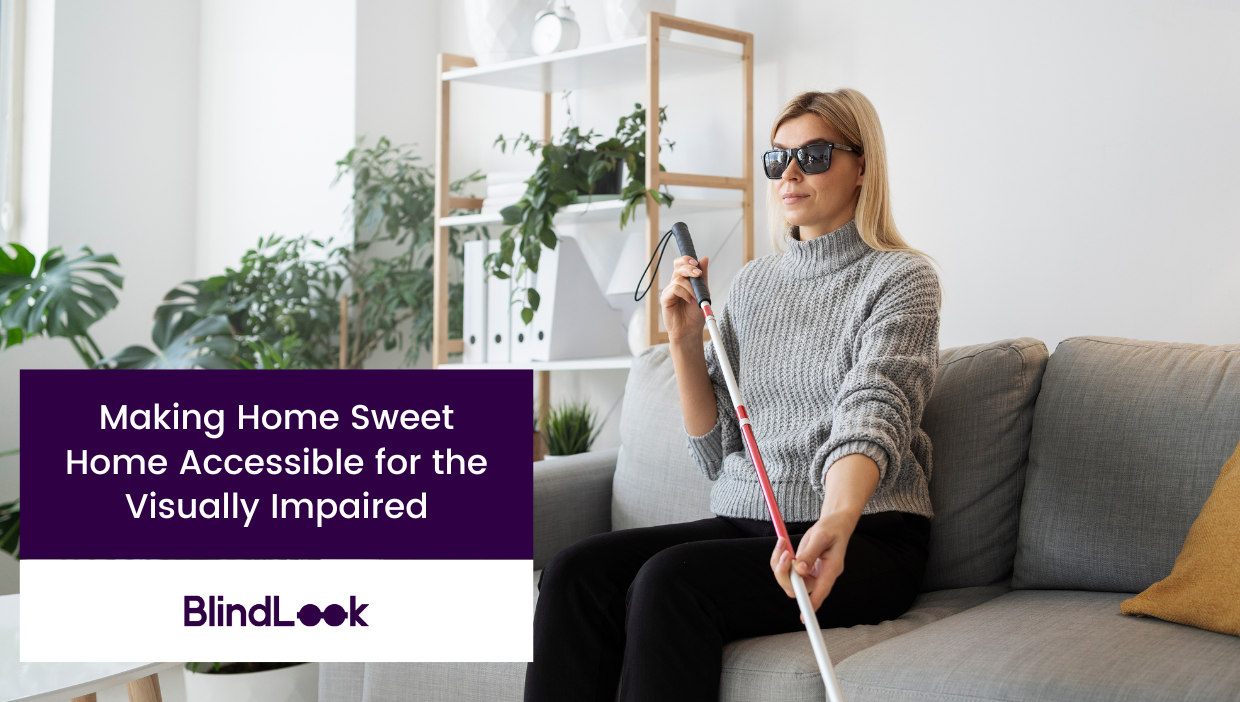
Hello, dear readers! Have you ever imagined walking around your kitchen with your eyes closed? For visually impaired individuals, this is a daily reality. But don't worry! Accessible home appliances can significantly reduce these challenges. These devices are designed to help visually impaired people live more independently and safely at home. They come equipped with features like voice feedback, tactile markers, and smart technology integration. Such appliances make everyday household tasks easier and allow individuals to perform them independently. In this article, we'll discuss how to make home life more accessible and comfortable. Let's explore together!
Easing Daily Life: The Role of Accessible Home Appliances
Imagine navigating your kitchen blindfolded. Simple tasks like cooking or cleaning can become daunting. However, with the advent of accessible home appliances, these challenges are being significantly reduced. The integration of voice commands, tactile feedback, and smart technology is paving the way for a more inclusive home environment.
These advancements are more than just convenient—they are empowering. Accessible devices like smart ovens that announce preheat status, or washing machines with raised buttons and Braille labels, enable visually impaired individuals to manage household chores with greater ease and confidence. This technological progress is not just about functionality; it’s about creating a sense of independence and dignity in everyday life.
The Power of Voice: Command and Control
For visually impaired individuals, the ability to control home appliances through voice commands is nothing short of revolutionary. Picture this: you wake up and verbally instruct your smart speaker to start your coffee machine or set the oven to preheat. Voice-activated devices not only make daily routines easier but also empower users to maintain their independence.
Tactile Innovations: Feeling Your Way Around
In addition to voice commands, tactile features on appliances are crucial for accessibility. Tactile markings, such as raised dots or Braille labels, allow users to identify buttons and settings by touch. These simple yet effective modifications enable visually impaired individuals to operate devices with confidence, without needing sighted assistance.
Smart Home Integration: A New Era of Independence
Smart home technology offers great convenience, especially for visually impaired individuals. With centralized systems and apps, managing home devices through a single interface is now possible. Users can control lighting, temperature, and security systems via a smartphone or tablet. For instance, you can adjust the thermostat with voice commands or turn lights on and off easily. This simplifies daily tasks and enhances safety and independence.
Additionally, these systems can be personalized with voice commands and auditory feedback. Smart lights can be controlled by voice, while security systems provide real-time alerts to keep users informed. These devices work together seamlessly to enhance safety and comfort at home. For example, a smart smoke detector can detect a fire hazard, activate lights to guide the user, and alert emergency services. This integrated technology plays a crucial role in enabling an independent lifestyle for visually impaired individuals.
BlindLook: Leading the Way in Accessibility
At BlindLook, we are passionately dedicated to making life easier for visually impaired individuals. Our goal is to ensure that everyone can equally benefit from technological advancements. That's why we collaborate closely with technology companies and appliance manufacturers to standardize accessibility features in new products. One inspiring example of our work can be seen in this Instagram video, where a visually impaired couple effortlessly prepares coffee using an accessible coffee machine. This video showcases how such technology can greatly impact daily routines, promoting independence and ease at home.
Empowering Through Education: Knowledge is Freedom
Access to information and education is key to making the most of these technological advancements. Workshops and online resources tailored for visually impaired individuals can teach them how to use these appliances effectively. By providing the necessary knowledge, we empower users to take full control of their home environment, enhancing their quality of life.
Conclusion: A Vision for the Future
As we continue to innovate and advocate for accessibility, the future looks promising for visually impaired individuals. With the integration of advanced technology and inclusive design, we are paving the way for everyone to live independently and confidently in their own homes. At BlindLook, we are proud to be at the forefront of this movement, collaborating with partners to ensure that accessibility is not just an added feature but a standard.
We believe that these advancements are not merely conveniences; they are essential tools that provide freedom and dignity. By embracing these changes, we can create a world where accessibility is a right for all, not a privilege. Join us in this mission to make technology inclusive for everyone. For more information and to get involved, click here. Together, we can make a difference and build a more inclusive future for all.
Author: İlayda Çicek / BlindLook Team