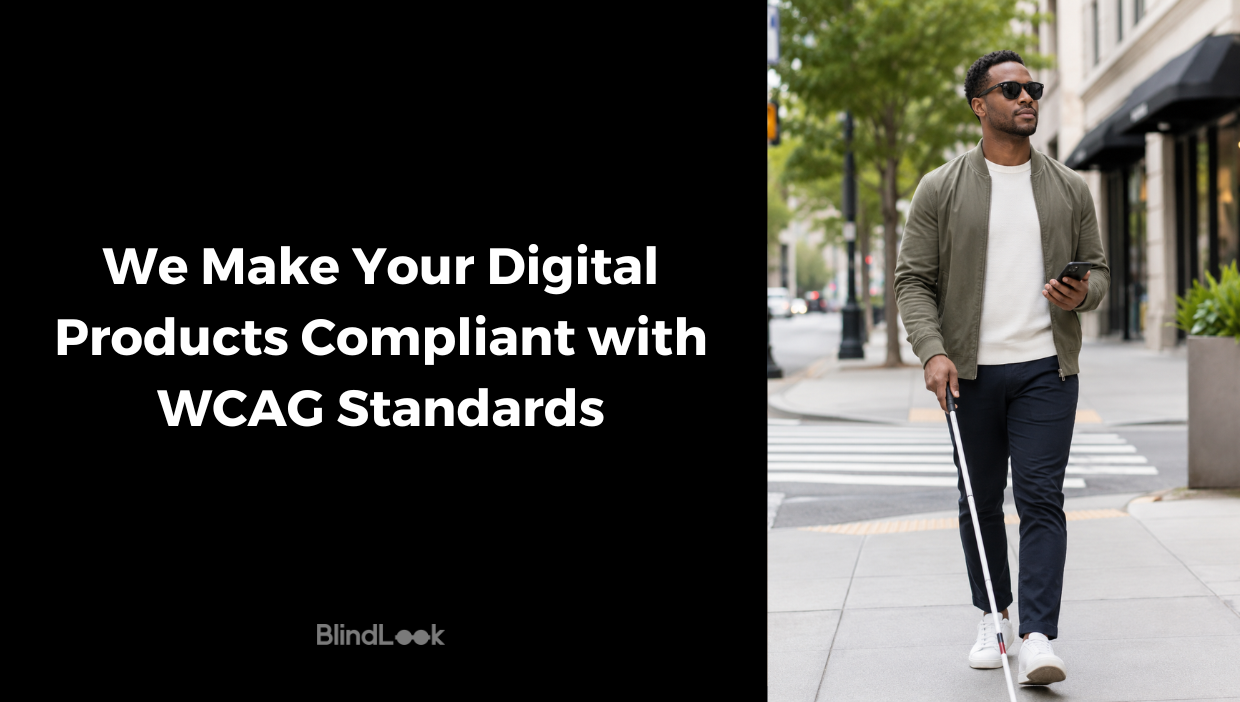
We Make Your Digital Products Compliant with WCAG Standards
Digital accessibility is no longer just a technical improvement area for brands that own websites, mobile applications, and digital platforms. It has become a strategic necessity in terms of legal compliance, user experience, brand trust, and inclusivity.
In many industries such as e-commerce, finance, banking, insurance, retail, cosmetics, technology, and automotive, ensuring that digital products are accessible to everyone is critically important for brands to offer equal and independent experiences to their users.
BlindLook manages the end-to-end process of making brands’ digital products compliant with WCAG standards through digital accessibility audits, screen reader compatibility checks, real user testing, accessibility reporting, and improvement processes.
What Is WCAG?
WCAG stands for Web Content Accessibility Guidelines. These standards aim to ensure that digital content is perceivable, operable, understandable, and robust for everyone, including users with disabilities.
WCAG compliance covers many accessibility requirements, including enabling visually impaired users to navigate websites with screen readers, allowing keyboard navigation, providing alternative text for images, making forms accessible, ensuring sufficient color contrast, and designing digital experiences that are understandable for everyone.
The 4 Core Principles of WCAG
WCAG is based on four core principles, commonly known as POUR: Perceivable, Operable, Understandable, and Robust.
1. Perceivable
Digital content must be perceivable by all users. Alternative text for images, descriptions for videos, sufficient color contrast, and content structures that are compatible with screen readers are key parts of this principle.
2. Operable
Users must be able to navigate a website or mobile application comfortably and complete all actions. Menus, buttons, forms, and payment steps should be usable not only with a mouse, but also with a keyboard and assistive technologies.
3. Understandable
The digital experience must be clear, consistent, and easy to understand. Users should not encounter complex guidance when filling out a form, making a payment, completing an application, or accessing information. Clear language, understandable error messages, and consistent navigation are important parts of this principle.
4. Robust
Websites, mobile applications, and digital platforms must work compatibly across different devices, browsers, and assistive technologies. Compatibility with screen readers, keyboard usage, and other assistive technologies is critical for sustainable accessibility.
Why Is WCAG Compliance Important for Brands?
WCAG compliance makes brands’ digital products more accessible, inclusive, and user-friendly. An inaccessible digital product can make it difficult for users to purchase products, make payments, fill out application forms, reach customer service, or access basic information.
This is directly related to user experience, conversion rates, and brand trust, especially for e-commerce websites, finance and banking applications, insurance platforms, retail brands, and digital service providers.
WCAG Compliance and Legal Requirements
Digital accessibility has become an area supported by legal regulations and standards in many countries. For brands, WCAG compliance is not only about offering a good user experience; it is also important in terms of accessibility regulations, directives, legal compliance, and corporate responsibility processes.
BlindLook supports brands in reducing compliance risks by managing their needs related to WCAG compliance, digital accessibility audits, accessibility regulations, and directive requirements from end to end.
WCAG Conformance Levels
WCAG standards have different conformance levels: A, AA, and AAA. Level A covers basic accessibility requirements, while Level AA is widely accepted as the target accessibility standard for many institutions and brands. Level AAA includes more advanced accessibility criteria.
BlindLook evaluates brands’ digital products in line with WCAG standards, analyzes their current accessibility status, and provides an actionable roadmap for the improvement process.
How Is WCAG Testing Conducted?
To evaluate WCAG compliance, automated accessibility tools, manual expert reviews, and real user testing should be used together. Automated tools can detect certain technical errors; however, real user experience is critical to understanding whether a digital product is truly accessible.
BlindLook combines automated analyses with screen reader testing and real user experience. This allows brands not only to receive a technical report, but also to understand whether users can actually perform actions independently on their website, mobile application, or digital platform.
What Does BlindLook Offer for WCAG Compliance?
BlindLook offers a 360-degree accessibility approach to help brands make their digital products compliant with WCAG standards.
Website accessibility, mobile application accessibility, screen reader compatibility, digital accessibility audits, real user testing, accessibility reporting, directive and regulation compliance, AI-powered analysis, and sustainable accessibility management are among the core solutions offered by BlindLook.
Digital Accessibility Across Industries
Each industry has different digital accessibility needs. At BlindLook, we manage brands’ WCAG compliance, screen reader compatibility, digital accessibility audits, and real user testing processes from end to end across many industries, including e-commerce, finance, banking, insurance, retail, cosmetics, technology, and automotive.
Accessibility for E-Commerce Websites
On e-commerce websites, the entire shopping experience must be accessible to everyone, especially steps such as product search, category navigation, product detail pages, cart, payment, and membership. BlindLook helps e-commerce brands offer an independent shopping experience for visually impaired users.
Accessibility for Finance and Banking
In finance and banking applications, it is critically important for the entire digital banking experience to be compatible with screen readers, especially steps such as viewing accounts, transferring money, applying for loans, managing card transactions, and accessing customer service. BlindLook makes banks’ and financial institutions’ digital channels WCAG-compliant, secure, and accessible.
Accessibility for Insurance Companies
For insurance companies, making digital insurance processes accessible is highly important for user experience, especially steps such as getting quotes, reviewing policies, submitting applications, reporting claims, and completing customer transactions. BlindLook helps insurance brands make their digital platforms more accessible and independently usable for users with disabilities.
Accessibility for Retail Brands
For retail brands, the entire customer journey must be accessible, from online shopping, product reviews, access to store information, and campaign tracking to physical store touchpoints. BlindLook offers retail brands 360-degree accessibility solutions that extend from digital to physical experiences.
Accessibility Solution Partner of Leading Brands
BlindLook has gained strong experience in digital accessibility and inclusivity by working with leading brands across many industries, including e-commerce, finance, banking, insurance, retail, cosmetics, technology, automotive, and sports.
Recognized with awards around the world, BlindLook develops accessibility solutions not for people with disabilities, but together with people with disabilities. By combining real user experience, technology, artificial intelligence, and accessibility expertise, BlindLook manages brands’ accessibility journeys from digital to physical, end to end.
Frequently Asked Questions
What is WCAG compliance?
WCAG compliance means making websites, mobile applications, and digital content accessible and usable for everyone, including users with disabilities, in line with accessibility standards.
Why is WCAG compliance important?
WCAG compliance improves user experience, reduces accessibility risks, increases brand trust, and makes digital services more inclusive.
Is automated accessibility testing enough?
No. Automated testing is an important starting point, but it is not sufficient on its own. It should be combined with real user testing, screen reader experience, and expert evaluation.
Which digital products should be WCAG-compliant?
Websites, mobile applications, e-commerce platforms, customer panels, online application forms, payment screens, and all digital service channels should comply with WCAG standards.
How does BlindLook support the WCAG compliance process?
BlindLook manages brands’ WCAG compliance process from end to end through digital accessibility audits, screen reader testing, real user testing, reporting, improvement recommendations, and sustainable accessibility management.
Summary
Making your digital products compliant with WCAG standards is not just a technical improvement; it is one of the fundamental steps toward offering more accessible, reliable, and inclusive experiences for everyone.
BlindLook helps make your websites, mobile applications, and digital platforms WCAG-compliant, screen reader-friendly, measurable, and sustainably accessible. Working with leading brands across many industries such as e-commerce, finance, banking, insurance, retail, and technology, BlindLook acts as a trusted solution partner in your brand’s accessibility journey.
Take Action
Contact BlindLook to make your website, mobile application, and digital platforms compliant with WCAG standards, reduce accessibility risks, and offer a more inclusive user experience for everyone.