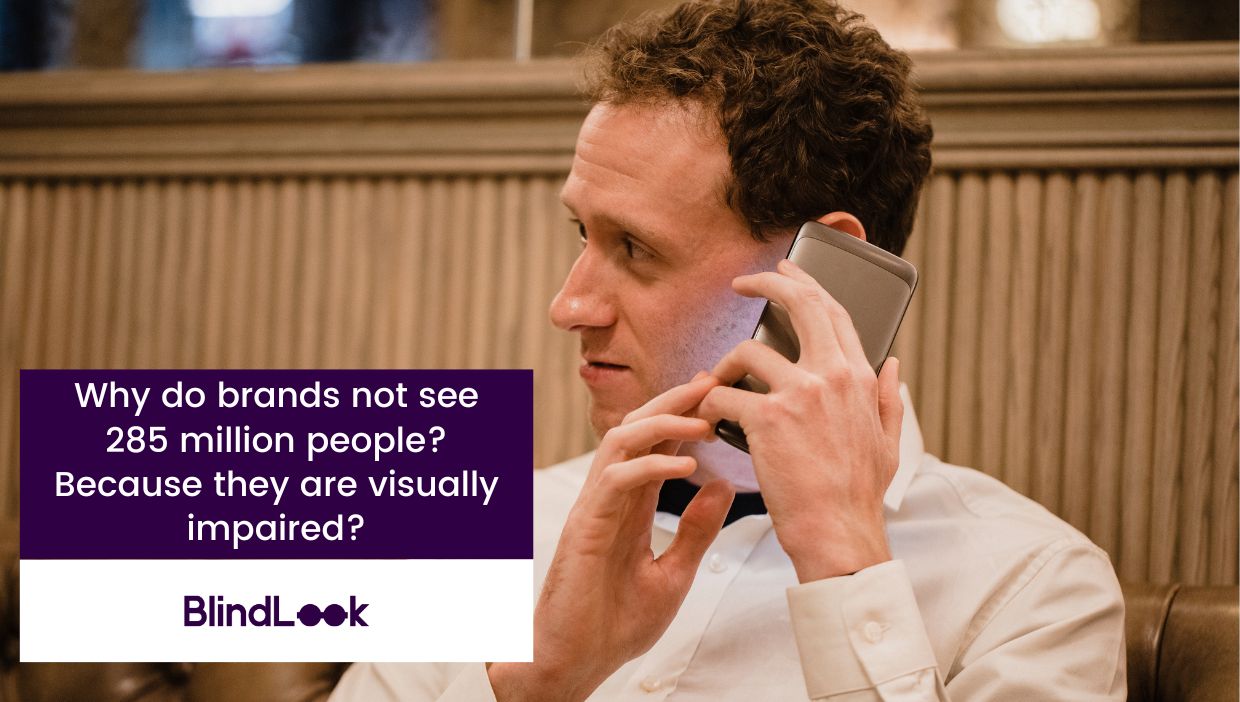
Here are 285 million visually impaired individuals living on Earth, who are a part of various cultures, experiences, and lifestyles. Visually impaired people are aware that what hinders them in their daily lives is not their inability to see but the societal neglect and accessibility issues they face. So, what are the obstacles they face? Being ignored or overlooked by society and brands is their biggest challenge!
The fact that visually impaired individuals cannot see does not limit their desire or ability to explore the world. This minor difference does not hinder them from receiving equal services or being free. Unfortunately, many brands overlook this reality and fail to understand the needs of visually impaired individuals. When a visually impaired person visits a website, examines products, or tries to use a service, they often experience a limited or restricted experience. The true source of this restricted experience is not the user's "inability to see" but rather the brand's "failure to see!"
Despite this limited, inclusive, or unequal service, visually impaired individuals pay the same price. Technically, brands are in a situation of "knowingly or unknowingly" depriving them of their rights. This contradicts principles of justice and equality. If they are paying an equal fee, they have the right to expect equal service. Brands should understand this reality and focus on providing a more accessible and inclusive experience for their visually impaired customers. What is required for brands to take action, what should they do? Is it not seeing?
Let's imagine a visually impaired person going to a restaurant. They sit at a table, and there is no accessible menu! If they have come alone, they will ask a waiter to read the menu for them. The waiter will quickly read it, maybe skipping the prices to save time. Perhaps they will only read the names of the dishes and skip the other ingredients... Accessibility issues arise within the first 5 minutes, even before placing an order. There are millions of visually impaired people who want to exercise, shop online, pay their bills through digital channels, and even do their own laundry or makeup. They are dependent on the "mercy" of brands, waiting for some action.
Brands should not ignore the existence of 285 million visually impaired individuals and should provide them with an accessible experience. Visually impaired individuals, like all others, have rights and should expect to receive services equally. Taking steps toward equality and inclusivity not only helps brands gain more customers but also ensures that they fulfill their social responsibilities.
This is where BlindLook comes into play. As BlindLook, we are a technology platform aiming to provide a better experience for visually impaired individuals. Through our AI-based voice-based world, which we call EyeBrand, we are liberating the visually impaired from an 80% visually oriented world. With our product named Access Point, we collect any issues, requests, or feedback visually impaired individuals have about brands and communicate them to the relevant brand. With Blind-Friendly Places, we make brands' physical establishments accessible and inclusive for visually impaired individuals. Our goal is to make the world accessible and inclusive, and we will work tirelessly until that day arrives! We know that the real barrier is not the inability to see but the failure to take action...
Author: Enes Ertürk / BlindLook Team